Category: Criminal Law

  • How Criminal Attorneys in Indianapolis Protect Your Rights After an Arrest

    How Criminal Attorneys in Indianapolis Protect Your Rights After an Arrest

    In Indianapolis, criminal attorneysplay a vital role in protecting your constitutional rights after an arrest. From the moment law enforcement detains you, every statement and action can influence your case. Skilled defense lawyers ensure due process is followed, evidence is obtained legally, and that your rights are not violated during interrogation, searches, or trial preparation under Indiana criminal law.

    Experienced criminal attorneys in Indianapolis focus on preserving your freedom, minimizing charges, and preventing prosecutorial overreach. They analyze every detail—from the legality of your arrest to how evidence was collected, to ensure that mistakes by police or investigators don’t compromise your future. Their comprehensive and strategic approach can mean the difference between conviction and case dismissal.

    How Indianapolis Criminal Attorneys Safeguard Your Rights During and After an Arrest

    When facing arrest in Indianapolis, every decision you make can affect the outcome of your case. Criminal attorneys step in immediately to ensure the process remains lawful and fair under Indiana and federal constitutional standards. They scrutinize how law enforcement conducted the arrest to prevent procedural errors that could jeopardize your rights or lead to wrongful charges.

    Key protections provided by defense attorneys include:

    • Ensuring probable cause: Verifying officers had a legitimate basis for your arrest.

    • Protecting Miranda rights: Confirming you were informed of your right to remain silent and request an attorney.

    • Preventing unlawful searches: Challenging any evidence seized without proper warrants or consent.

    • Reviewing police reports: Identifying inconsistencies or incomplete documentation that could weaken the prosecution’s case.

    • Analyzing bodycam or dashcam footage: Detecting any misconduct, coercion, or deviation from standard procedures.

    Attorneys also counsel you on when and how to speak, ensuring you do not unintentionally incriminate yourself. This early intervention often prevents damaging statements that prosecutors might later use in court. By acting quickly, Indianapolis criminal attorneys safeguard your constitutional rights and lay the foundation for a strong, strategic defense.

    What Happens After an Arrest in Indianapolis?

    After an arrest in Indianapolis, the process begins with booking, where law enforcement records your personal details, fingerprints, and photographs. You are then formally charged based on the alleged offense and scheduled for an initial hearing, known as an arraignment. At this hearing, the judge informs you of the charges, advises you of your rights, and determines whether you’ll be released on bail or remain in custody.

    Your criminal defense attorney’s role is crucial at this stage. They advocate for fair bail terms, ensuring that your release conditions are reasonable and not excessively punitive. Skilled attorneys also review how the arrest occurred, analyze the prosecution’s evidence, and identify procedural errors such as unlawful searches or detentions that could justify early motions to dismiss or reduce charges.

    Beyond the courtroom, attorneys begin shaping your legal defense immediately. They gather evidence, interview witnesses, and ensure that your case is handled under Indiana’s strict procedural and constitutional standards. By challenging the prosecution’s assumptions early and ensuring that your rights are upheld from the start, Indianapolis criminal attorneys strengthen your chances of a favorable outcome long before trial begins.

    How Is Evidence Used Against You in a Criminal Case?

    Evidence forms the foundation of every criminal prosecution in Indianapolis. Prosecutors rely on it to prove guilt beyond a reasonable doubt, but skilled defense attorneys know that evidence is only as strong as the process used to obtain it. Every detail—from how police collected it to how it’s handled in storage can determine whether it’s admissible in court or challenged successfully.

    Criminal defense attorneys carefully review each piece of evidence to ensure it meets Indiana’s strict procedural standards. Common areas they investigate include:

    • Chain of custody: Ensuring every piece of evidence was documented, sealed, and transferred correctly without tampering.

    • Search and seizure legality: Determining whether law enforcement had valid warrants or probable cause to collect evidence.

    • Forensic testing accuracy: Evaluating whether lab results, DNA samples, or toxicology reports were handled or interpreted correctly.

    • Digital and video evidence: Reviewing surveillance footage, text messages, or digital data for authenticity and context.

    • Witness statements: Comparing inconsistencies or bias that could weaken the credibility of prosecution witnesses.

    Defense attorneys also work with forensic and investigative experts to challenge unreliable methods or flawed interpretations. When errors are found, they file motions to suppress evidence or exclude it entirely from trial. By revealing weaknesses in the prosecution’s case, Indianapolis criminal lawyers create reasonable doubt, often leading to reduced charges, acquittals, or favorable plea agreements.

    Can a Criminal Lawyer Challenge Police Misconduct?

    Yes. A criminal lawyer can challenge police misconduct, including coercive interrogations, fabricated evidence, false testimony, or the use of excessive force during arrest. Such actions violate both state and federal constitutional protections. Under Indiana law, defense attorneys can request suppression hearings to exclude any evidence obtained through unlawful means, such as illegal searches, warrantless seizures, or rights violations during questioning. These challenges can completely change the course of a criminal case.

    Experienced Indianapolis defense attorneys don’t just expose misconduct; they hold law enforcement accountable for overstepping legal boundaries. By meticulously reviewing arrest reports, surveillance footage, and bodycam recordings, lawyers identify procedural flaws that may have compromised the integrity of the investigation. This proactive defense not only safeguards your Fourth, Fifth, and Sixth Amendment rights but often results in reduced penalties, dismissed charges, or full acquittals when police fail to uphold due process.

    Can You Still Fight Charges If You Confessed?

    Yes. Even if you confessed to a crime, an Indianapolis criminal attorney can still challenge how that confession was obtained and whether it’s legally valid. Not all confessions are admissible, especially if they were made under pressure, fear, or confusion. Law enforcement must follow strict Miranda procedures, and any failure to advise you of your right to remain silent or request an attorney can make your statement unusable in court.

    Attorneys also investigate whether your confession was truly voluntary. If officers used threats, intimidation, exhaustion, or misleading tactics, the court may determine that the confession was coerced. A seasoned defense lawyer reviews all interrogation recordings, witness accounts, and police notes to uncover any signs of misconduct or manipulation that could invalidate the confession entirely.

    Moreover, your lawyer examines whether the confession aligns with other evidence in the case. If there are inconsistencies such as timing errors, missing corroboration, or factual inaccuracies, it may indicate confusion or forced compliance rather than guilt. By highlighting these discrepancies, Indianapolis criminal defense attorneys can cast significant doubt on the prosecution’s version of events, often leading to reduced charges, plea options, or complete dismissal.

    How Long Does a Criminal Case Take in Indianapolis?

    The duration of a criminal case in Indianapolis depends on multiple factors, including the seriousness of the charges, court scheduling, and plea negotiations. While minor misdemeanors might resolve in a few weeks through diversion or plea deals, more serious felonies can take months or even longer, especially if the case proceeds to trial. Each stage of the process requires strategic attention and timely legal action.

    Typical stages that affect how long a criminal case takes include:

    • Initial Hearings: After the arrest, arraignment, and bail hearings occur within days, setting the case timeline in motion.

    • Pretrial Motions: Attorneys file motions to suppress evidence or dismiss charges, which can add weeks to the schedule depending on court availability.

    • Discovery Phase: Both sides exchange evidence, review witness statements, and analyze reports, a process that can extend proceedings if the case is complex.

    • Plea Negotiations: Defense attorneys often negotiate plea agreements to reduce time and sentencing exposure. These discussions can shorten or lengthen the case depending on the outcome.

    • Trial and Sentencing: If the case goes to trial, it may take several months for jury selection, presentation of evidence, and final sentencing.

    Throughout this timeline, defense attorneys remain proactive, maintaining communication, investigating new leads, and filing procedural motions to protect your rights. Their consistency ensures your defense stays strong, deadlines are met, and every opportunity to secure a favorable resolution is fully explored under Indiana criminal law.

    FAQs

    Can police question me without a lawyer present?
     No. You have the right to remain silent and request an attorney before answering any police questions. Without counsel, even innocent remarks can be misinterpreted or used against you in court. An Indianapolis criminal defense lawyer ensures that all questioning respects your constitutional rights and prevents coerced or misleading statements from being admitted as evidence.

    What if I were arrested unlawfully?
     If police lacked probable cause, conducted an illegal search, or failed to follow proper procedures, your attorney can file a motion to suppress evidence or seek dismissal of charges. Unlawful arrests violate both state and federal law, and exposing these violations can significantly weaken the prosecution’s case, often leading to dropped or reduced charges.

    How soon should I hire a lawyer after an arrest?
     Immediately. The earlier an attorney intervenes, the stronger your defense will be. A criminal lawyer protects you during interrogation, preserves evidence, and prevents investigators from overstepping legal boundaries. Quick legal action also helps secure favorable bail conditions, challenge improper charges, and shape the direction of your defense strategy from the very beginning.

    Can criminal charges be expunged in Indiana?
     Yes. Under Indiana Code 35-38-9, certain criminal convictions and arrests can be expunged after specific waiting periods. This process clears your public record, improving access to jobs, housing, and education. Your attorney reviews your eligibility and handles the legal filings to help you restore your reputation and move forward with a clean slate.

    Do first-time offenders go to jail in Indianapolis?
     Not always. Indiana courts often offer alternatives like probation, diversion programs, or community service for first-time offenders. These programs focus on rehabilitation rather than punishment, especially for nonviolent offenses. A skilled defense attorney can advocate for these outcomes, helping you avoid incarceration and keep your record as clear as possible.

    Consult With a Skilled Indianapolis Criminal Lawyer to Challenge Illegal Searches and Arrests

    Facing criminal charges after an arrest can be intimidating, especially if police violated your rights during a search or interrogation. Many defendants feel trapped by aggressive questioning, unfair treatment, or evidence obtained through unconstitutional methods. Without immediate legal guidance, these violations can go unchallenged and seriously damage your defense.

    At Eskew Law, our Indianapolis criminal defense attorneys understand how to identify and expose unlawful police conduct. We meticulously analyze every step of your arrest to ensure your constitutional protections are upheld. Our team’s deep knowledge of Indiana criminal law and courtroom experience allows us to suppress illegally obtained evidence and fight for fair treatment, helping you reclaim control over your case and your future.


  • Common Reason Disability Claims are Denied

    Common Reason Disability Claims are Denied

    If you apply for Social Security Disability there is only less than a 33% chance you will be approved on your initial attempt. This means two-thirds of all applicants are denied disability from the start. 

    The SSA will provide you with a reason as to why your application was denied. In this post, we want to go over several of the most common reasons according to a disability attorney in Brevard County, Florida. 

    Insufficient Medical Evidence is the biggest reason applicants are denied Social Security Disability. Basically, this means the application simply did not prove the case of disability. Most commonly, this is because the applicant didn’t include the medical data or has yet to seek the proper medical evaluations needed. 

    Incomplete or Erroneous Application is the number 2 reason people are denied. This is surely 99% of applicants first time even having any encounter with the disability system and it is easy to become confused and make mistakes. Having a clear cut and well-rounded case to present the SSA is the best way to get approved. Unlike other kinds of law, disability is pretty straight forward. Present your best case and get approved or denied. 

    Failure to Folow Prescribed Treatments for your condition is one reason you may be denied as well. This is because there are pretty strict rules about the path to being approved for disability. In the eyes of the SSA, if you haven’t tried what your doctors told you to, then how can they possibly approve payments? It is advisable that you do exactly what the Doctor has told you to and if there is no resolution you can then apply for disability showing that this is the case. 

    Filing an Appeal is your right under the law. But presenting the same exact case will get you the same exact results. You must build a better case before you re-apply. Hiring an attorney to help you with your application or appeal will improve your chances at approval by up to 50%. 

  • Key Factors to Consider When Hiring an Expungement Attorney

    Key Factors to Consider When Hiring an Expungement Attorney

    When facing a criminal record, the prospect of expungement can offer a fresh start. However, navigating the legal process requires the expertise of an expungement attorney. Choosing the right one is critical to ensure your case is handled effectively and efficiently. Below are the key factors you should consider when hiring an attorney to guide you through this important process.

    Experience with Expungement Law

    Experience is one of the most important factors when hiring an expungement attorney. While many lawyers practice in a variety of legal areas, it’s essential to find one who specializes in expungement. These attorneys are familiar with the specific legal procedures, requirements, and challenges associated with expunging a criminal record. They can identify whether your case is eligible for expungement and advise you on the best course of action.

    Understanding the Local Legal Landscape

    Each state and jurisdiction has different laws regarding expungement. The process can vary significantly depending on where you are located. A qualified expungement attorney with knowledge of local laws and court systems can provide crucial insights. They will know the nuances of how the courts in your area handle expungement petitions. This localized expertise can make a substantial difference in the success of your case.

    Track Record of Success

    While experience is important, a strong track record of successful expungements speaks volumes. When researching potential attorneys, ask about their success rate with expungement cases. An attorney with a history of successfully securing expungements for their clients is more likely to handle your case with skill and attention to detail. Look for client reviews or testimonials that can provide insight into their abilities.

    Clear Communication and Accessibility

    Communication is vital throughout the legal process. It’s important that your expungement attorney is accessible and responsive to your questions. The legal process can be lengthy and complex, and you’ll want someone who keeps you informed at each stage. A good attorney will be able to explain the process in simple terms, ensuring you understand what’s happening and why certain steps are necessary.

    Expungement Attorney Fee Structure and Transparency

    Understanding how the expungement attorney charges for their services is essential. Some attorneys work on a flat fee basis, while others charge hourly rates. Be sure to ask about the pricing structure up front, so there are no surprises later. Transparency is key in this regard. A reputable attorney will provide clear information about their fees and any additional costs that may arise during the process.

    Comfort and Trust

    Expungement is a deeply personal matter. The attorney you hire will be handling sensitive information about your past. Therefore, it’s crucial that you feel comfortable and trust them with your case. A good attorney should listen to your concerns, offer thoughtful advice, and make you feel confident in their abilities. Trust is the foundation of any successful attorney-client relationship, and this is no different when it comes to expungement cases.

    Conclusion

    Hiring an expungement attorney is a pivotal decision. You need someone who has the expertise, experience, and communication skills to help you navigate the expungement process successfully. By considering factors such as experience with expungement law, knowledge of local legal procedures, a proven track record, and clear communication, you can find an attorney who will work in your best interests. Additionally, make sure to discuss fees upfront and ensure that you feel comfortable and confident in your attorney’s ability to handle your case.

  • Civil Law vs. Criminal Law: Key Differences Explained

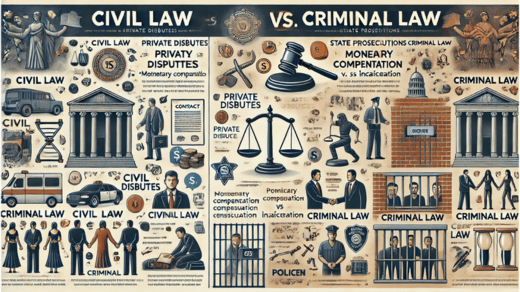
    Civil Law vs. Criminal Law: Key Differences Explained

    Understanding the legal system can often be confusing, especially when it comes to distinguishing between civil law and criminal law. Both areas of law are essential in maintaining order and justice in society, but they serve different purposes and operate under distinct principles. In this comprehensive guide, we will explore the key differences between civil law and criminal law, helping you to understand their unique functions and processes.

    What is Civil Law?

    Civil law primarily deals with disputes between individuals, organizations, or between individuals and organizations. These disputes typically involve private matters such as contracts, property, and family issues. The primary objective of civil law is to resolve these disputes and provide compensation or remedies to the aggrieved party.

    Common Areas of Civil Law

    1. Contract Law: This area governs agreements made between two or more parties. If one party fails to fulfill their obligations under a contract, the other party may seek legal remedies through civil court.
    2. Property Law: Property law covers disputes related to ownership and use of property. This includes real estate issues, landlord-tenant disputes, and property transfers.
    3. Family Law: Family law addresses issues such as divorce, child custody, and child support. It aims to resolve family disputes and provide solutions that are in the best interest of family members, especially children.
    4. Torts: Torts involve civil wrongs that cause harm or loss to another person. Common tort cases include personal injury claims, defamation, and negligence.

    Civil Law Procedures

    Civil cases typically involve a plaintiff (the party bringing the lawsuit) and a defendant (the party being sued). The plaintiff must prove their case by a “preponderance of the evidence,” which means they need to show that their version of events is more likely true than not. Remedies in civil cases often involve monetary compensation, specific performance, or injunctions.

    What is Criminal Law?

    Criminal law, on the other hand, deals with offenses against the state or society as a whole. These offenses are considered crimes, and the primary goal of criminal law is to punish the offender and deter others from committing similar acts. Criminal law also aims to rehabilitate offenders and protect the public.

    Common Areas of Criminal Law

    1. Felonies: These are serious crimes that typically result in severe penalties, including imprisonment for more than one year. Examples of felonies include murder, rape, and armed robbery.
    2. Misdemeanors: Misdemeanors are less severe than felonies and usually result in less severe penalties, such as imprisonment for less than one year or fines. Examples include petty theft, simple assault, and traffic violations.
    3. Infractions: Infractions are minor violations that usually result in fines rather than imprisonment. Examples include speeding tickets and littering.

    Criminal Law Procedures

    Criminal cases are initiated by the state or federal government, which prosecutes the accused (defendant) on behalf of society. The prosecution must prove the defendant’s guilt “beyond a reasonable doubt,” which is a higher standard than in civil cases. If found guilty, the defendant may face penalties such as imprisonment, probation, fines, or community service. In criminal cases, the defendant is presumed innocent until proven guilty.

    Key Differences Between Civil and Criminal Law

    Understanding the key differences between civil and criminal law can help clarify how each area of law functions and its purpose within the legal system.

    1. Purpose:
      1. Civil Law: Aims to resolve disputes and provide compensation or remedies to the aggrieved party.
      1. Criminal Law: Aims to punish the offender, deter crime, and protect society.
    2. Parties Involved:
      1. Civil Law: Involves a plaintiff (the party bringing the lawsuit) and a defendant (the party being sued).
      1. Criminal Law: Involves the state or federal government (the prosecution) and the defendant (the accused).
    3. Burden of Proof:
      1. Civil Law: Requires proof by a “preponderance of the evidence” (more likely true than not).
      1. Criminal Law: Requires proof “beyond a reasonable doubt” (a higher standard of proof).
    4. Penalties:
      1. Civil Law: Remedies often include monetary compensation, specific performance, or injunctions.
      1. Criminal Law: Penalties may include imprisonment, probation, fines, or community service.
    5. Outcome:
      1. Civil Law: The outcome usually involves the defendant being required to pay damages or fulfill a contractual obligation.
      1. Criminal Law: The outcome typically involves the defendant facing criminal penalties, such as incarceration or fines.
    6. Legal Representation:
      1. Civil Law: Parties may hire private attorneys or represent themselves in court.
      1. Criminal Law: Defendants have the right to legal representation, and if they cannot afford an attorney, one may be appointed by the court.
    7. Appeals:
      1. Civil Law: Either party may appeal the court’s decision if they believe there was an error in the proceedings.
      1. Criminal Law: Defendants may appeal a conviction if they believe there was a legal error or procedural mistake during the trial.

    Examples of Civil vs. Criminal Cases

    To illustrate the differences, consider the following examples:

    • Civil Case: A tenant sues their landlord for failing to make necessary repairs to the rental property. The court may order the landlord to make the repairs or pay damages to the tenant.
    • Criminal Case: A person is charged with theft after being caught shoplifting. If convicted, the person may face imprisonment, fines, or probation.

    Conclusion

    Civil law and criminal law serve distinct purposes within the legal system, each addressing different types of disputes and offenses. Civil law focuses on resolving private disputes and providing remedies to individuals, while criminal law aims to punish offenders and protect society. Understanding these differences is crucial for navigating legal matters effectively, whether you are involved in a civil dispute or facing criminal charges.

    By recognizing the key differences between civil and criminal law, you can better understand the legal processes and ensure that your rights and interests are protected. Whether dealing with a civil case or a criminal case, it is essential to seek appropriate legal advice and representation to navigate the complexities of the legal system successfully.

  • 40 Common Misconceptions About Criminal Law and the Justice System

    1. “Innocent Until Proven Guilty” Means Everyone Gets a Fair Trial

    Reality: This is a basic principle, but biases, inadequate representation, and systemic flaws can affect fairness.

    2. All Defendants Get Free Legal Representation

    Reality: Public defenders are available for those who qualify financially, but their caseloads may limit the quality of representation.

    3. Police Always Need a Warrant to Search

    Reality: Exceptions like consent, exigent circumstances, or searches incident to arrest allow warrantless searches.

    Also read:

    4. Confessions Are Always Voluntary

    Reality: Coercion, intimidation, or deception may result in false confessions, which courts must scrutinize closely.

    5. Plea Bargains Are Rare

    Reality: The vast majority of criminal cases are settled through plea bargains, not trials.

    6. All Crimes Are Prosecuted Equally

    Reality: Prosecution decisions may be influenced by race, class, and jurisdiction.

    7. Self-Defense Always Justifies Violence

    Reality: Self-defense must meet certain legal requirements, such as proportionality and imminent threat.

    8. Entrapment Means Any Police Sting Is Illegal

    Reality: Entrapment only applies if law enforcement induces someone to commit a crime they wouldn’t otherwise commit.

    9. All Evidence Is Admissible

    Reality: Evidence obtained illegally or deemed irrelevant may be excluded through motions.

    10. Double Jeopardy Means You Can Never Be Tried Again

    Reality: Double jeopardy prevents retrial for the same offense, but new charges or separate jurisdictions may still apply.

    11. Circumstantial Evidence Isn’t Reliable

    Reality: Circumstantial evidence is persuasive and frequently the sole evidence of convictions.

    12. Juries Always Understand Legal Instructions

    Reality: Jury instructions can be confusing, leading jurors to misunderstand the law.

    13. All Defendants Testify in Their Defense

    Reality: Many defendants decline to testify in order not to incriminate themselves or bring attention to their own involvement in the crime.

    14. “Not Guilty” Means Innocent

    Reality: A “not guilty” verdict means the prosecution failed to prove guilt beyond a reasonable doubt, not necessarily innocence.

    15. Criminal Trials Are Always Quick

    Reality: Trials often take months or years to begin due to pre-trial motions, investigations, and court backlogs.

    16. Eyewitness Testimony Is Always Reliable

    Reality: Memory can be unreliable, and eyewitness misidentification is a leading cause of wrongful convictions.

    17. A Conviction Requires Physical Evidence

    Reality: Testimonies, confessions, and circumstantial evidence can prove sufficient for convictions.

    18. Judges Have Full Discretion When it Comes to Sentencing

    Reality: In most cases, guidelines, minimums, and precedents keep a check on judges’ discretionary power.

    19. Juveniles Are Always Tried in Juvenile Court

    Reality: Even for serious cases, juveniles may be tried as adults.

    20. All Criminal Records Are Permanent

    Reality: Expungement and sealing procedures can destroy or limit the accessibility of specific records.

    21. You Cannot Be Convicted Without DNA Evidence

    Reality: DNA evidence is not necessary; other forms of evidence usually result in convictions.

    22. Insanity Pleas Are Common and Successful

    Reality: Insanity defenses are infrequently successful because the legal standard for them is quite strict.

    23. Bail Is Meant to Punish

    Reality: Bail guarantees that a defendant will appear for trial; it is not intended to punish the defendant.

    24. Defendants Can Easily Appeal Convictions

    Reality: Appeals are strictly limited to specific legal errors and do not result in a new trial.

    25. All Crimes Get Taken to Trial

    Reality: Plea bargains and dismissal are the norm for most cases.

    26. The Justice System Practices Its Hated Concept of Equal Justice

    Reality: Socioeconomic factors often play into outcomes, from bail to sentences.

    27. The Police Must Read You Your Rights Every Time

    Reality: Miranda rights are only required for custodial interrogations.

    28. If You Get a Lawyer, You’ll Walk Scot-Free

    Reality: Even the greatest lawyers can’t guarantee certain outcomes.

    29. Parole Means You’re Free to Leave

    Reality: Parole is accompanied by strict conditions, and any violations may send the person back to prison.

    30. Minor Offenses Don’t Have Serious Consequences

    Reality: Even a misdemeanor can lead to jail time, fines, or a permanent record.

    31. Prosecutors Must Share All Evidence

    Reality: They must disclose exculpatory evidence, but failures or omissions are possible.

    32. You Can’t Be Charged Twice for the Same Act

    Reality: Separate charges or dual sovereignty (state and federal) may mean multiple prosecutions.

    33. All Crimes Are Intentional

    Reality: Some crimes involve negligence or recklessness rather than intent.

    34. Public Defenders Aren’t Real Lawyers

    Reality: Public defenders are licensed attorneys, often with significant courtroom experience.

    35. Prosecutors Always Seek Justice

    Reality: Prosecutors may focus on securing convictions, sometimes at the expense of fairness.

    36. Only Guilty People Get Convicted

    Reality: Mistakes, systemic biases, or inadequate defense can lead to wrongful convictions.

    37. Private Prisons Operate the Same as Public Prisons

    Reality: Private prisons are for-profit and often face criticism for prioritizing cost-cutting over inmate welfare.

    38. Police Can Arrest Without Probable Cause

    Reality: Arrests require probable cause, but what constitutes probable cause can be debated.

    39. A Conviction Means the Case Is Over

    Reality: Post-conviction relief options like appeals or habeas corpus petitions may remain.

    40. Criminal Law Is the Same Everywhere

    Reality: Laws are vastly different between jurisdictions, and what is considered a crime in one jurisdiction is perfectly legal elsewhere.

    Conclusion

    Myths surrounding criminal law and the judicial system create unrealistic expectations or misconceptions. Knowledge of reality makes it possible to better navigate and understand the processes of law. Always consult an attorney with proper qualifications regarding your specific legal issues.

  • How to Prepare for a Criminal Trial in 30 Steps

    Pre-Trial Preparation

    1. Charges

    Read through the exact charges and elements involved to construct a defense.

    2. Lawyer Representation

    Secure the services of a competent criminal defense attorney with some experience handling a case similar to yours.

    3. Discovery

    Obtain copies of all the evidence that will be introduced during the case:

    Police reports

    Witness statements

    Physical evidence.

    Also read:

    4. Independent Investigation

    Independent investigation into facts and evidence which support your case.

    5. Key Witnesses

    List of persons who can appear to testify in your favour or give some essential information

    6. Compelling Witnesses through Subpoenas

    Subpoena reluctant witnesses.

    7. Gathering Physical Evidence

    Collect other evidence, that is, objects and documents etcetera. Include photographs for instance.

    8. Expert Witnesses

    Identify experts, who would testify if necessary, forensic scientists, psychologists etcetera

    9. Formulation of Defence Strategy

    You have an option of alibi, self defence, mistaken identity, no intent.

    10. Research Applicable Laws

    Learn the statutes, case law, and precedents applicable to the charges.

    Pre-Trial Motions and Hearings

    11. Prepare and File Pre-Trial Motions

    File motions to exclude evidence, dismiss charges, or motion for a change of venue.

    12. Attend Pre-Trial Hearings

    Argue motions and resolve procedural matters before trial begins.

    13. Evaluate Plea Bargains

    Talk to your attorney about plea deal options and determine whether to plead or go to trial.

    Preparing Witnesses

    14. Interview Witnesses

    Pre-trial interview of your witnesses to understand what they would say.

    15. Witness Testimony

    Assist witnesses in rephrasing their statements so that they are clear and relevant.

    16. Mock Examinations

    Practice direct and cross-examination of your witnesses on how the prosecution would approach the case.

    Evidence Review

    17. Prosecution Evidence

    Analyze the weaknesses, inconsistencies, or possible tampering with the evidence.

    18. Defense Evidence

    Organize the presentation of evidence to defend your case.

    19. Objections

    Anticipate the prosecution’s objections to inadmissible or irrelevant evidence.

    Trial Logistics

    20. Tour the Courtroom

    Get to know the courtroom layout and procedures.

    21. Verify Trial Logistics

    Make sure all witnesses, evidence, and documentation are prepared for trial day.

    22. Prepare Opening and Closing Statements

    Write compelling and concise statements to frame your defense narrative.

    23. Develop Jury Selection Strategy

    Work with your attorney to identify favorable or unfavorable juror profiles.

    Jury Selection and Opening Statements

    24. Conduct Voir Dire

     Assist your lawyer to ask the panel of jurors any questions that would reveal biases

    25. Present an Interesting Opening Statement

    Develop your case hypothesis and highlight critical points without becoming too verbose.

    At Trial

    26. Offer Evidence in an Organized Fashion

    Present defense evidence in a chronological order to demonstrate credibility.

    27. Cross Examine Prosecution Witnesses

    Make them explain inconsistent statements and inability to tell the truth

    28. Call Defense Witnesses

    Testify against the prosecution story and defend yours

    29. Answer Objections

    Work with your attorney to answer prosecution objections properly.

    30. Present a Winning Closing Argument

    Summarize your case and point out weakness in the government’s case to appeal to the jury sense of justice.

    Conclusion

    Preparing for a criminal trial is a complex process that requires legal expertise, attention to detail, and strategic planning. These steps will help you build a robust defense and increase your chances of a favorable outcome. Always work closely with your legal team to ensure thorough preparation.

  • 25 Most Famous Criminal Law Cases and Their Impacts

    1. O.J. Simpson (1995) – “The Trial of the Century”

    Summary: O.J. Simpson was acquitted for the murders of Nicole Brown Simpson and Ron Goldman.

    Contribution: Demonstrated racial conflict within the U.S. judicial system and raised attention to how to properly manage forensic evidence.

    2. Miranda v. Arizona (1966)

    Summary: The confession by Ernesto Miranda was used in a trial without having his rights read to him.

    Contribution: Established the “Miranda rights” such as the right to remain silent.

    Also read:

    3. Nuremberg Trials (1945-1946)

    Overview: Tried Nazi officials for war crimes and crimes against humanity.

    Impact: Established the foundation of international criminal law and accountability.

    4. Trial of Ted Bundy (1979)

    Overview: Serial killer Ted Bundy was convicted of murder.

    Impact: Provided a significant milestone in the increased role of victim advocacy in the justice system, as well as the efficacy of behavioral profiling.

    5. Roe v. Wade (1973)

    Overview: Norma McCorvey (“Jane Roe”) challenged Texas laws criminalizing abortion.

    Impact: Led to legalized abortion throughout the United States, a source of debate for decades.

    6. The Scottsboro Boys (1931)

    Summary: Nine black youths were wrongly accused of raping two white women.

    Impact: Emphasized racial injustice and helped define the right to an adequate legal defense.

    7. The Trial of Al Capone (1931)

    Summary: Chicago crime lord Al Capone was convicted of income tax evasion.

    Impact: Demonstrated the use of financial statutes to convict organized crime.

    8. Brown v. Board of Education (1954)

    Overview: Ended segregation in public schools.

    Impact: Held segregation to be unconstitutional and thereby affected the application of criminal law enforcement in civil rights cases.

    9. The Central Park Five (1989)

    Overview: Five teens wrongly convicted of assault and rape.

    Impact: Raised issues about coerced confessions and racial bias in the system.

    10. The Trial of Dr. Crippen (1910)

    Overview: Hawley Crippen was found guilty of murdering his wife.

    Impact: The case showcased the strength of forensic science, such as toxicology.

    11. The Leopold and Loeb Case (1924)

    Overview: Two affluent young men were convicted of killing a 14-year-old boy.

    Impact: Psychological defenses entered criminal trials.

    12. Manson Family Murders (1969)

    Overview: Charles Manson and his followers were convicted of mass murders.

    Impact: Parole hearings and victim impact statements began to change.

    13. State v. Zimmerman (2013)

    Overview: George Zimmerman was acquitted in the murder of Trayvon Martin.

    Impact: The killing sparked national discussions on racial profiling and self-defense laws.

    14. The Lindbergh Baby Kidnapping (1932)

    Summary: Bruno Hauptmann was convicted of kidnapping and murdering Charles Lindbergh Jr.

    Consequence: Resulted in stricter federal kidnapping laws.

    15. People v. Turner (2016)

    Summary: Brock Turner was convicted of raping an unconscious woman.

    Consequence: Caused public outcry over light sentences for rape offenders.

    16. Jack the Ripper (1888)

    Summary: The serial killer terrorizing London was never caught.

    Consequence: Influenced procedures of investigation and media involvement in criminal cases.

    17. The Case of Casey Anthony (2011)

    Summary: Casey Anthony was acquitted of killing her daughter Caylee.

    Issue: Raised questions about circumstantial evidence in major cases.

    18. The Boston Strangler (1960s)

    Summary: Albert DeSalvo confessed to killing 13 women.

    Issue: Questioned the role of mental illness in criminal responsibility

    19. R. v. Dudley and Stephens (1884)

    Summary: Two sailors were found guilty of killing and devouring a shipwrecked boy to survive.

    Impact: Established juridical concept of necessity for a murder crime as a set of legal defined limits.

    20. The Eichmann Trial (1961)

    Summary: Israeli trial Nazi officer Adolf Eichmann over the Holocaust mass killings.

    Impact: Reemphasized concept of universal jurisdiction of crimes of humanity.

    21. The Massacre at Columbine High School (1999)

    Summary: Two students murder 13 inside the school. Subsequently died themselves.

    Impact: Catalyzes discussions related to gun controls, school protection, and child criminal justice.

    22. Enron Scandal, 2001

    Summary: CEOs were charged with fraud and conspiracy.

    Social Change: Lead to tougher corporation regulations (the Sarbanes-Oxley Act).

    23. The Trial of Jeffrey Dahmer, 1992

    Summary: Defendant Dahmer had killed and murdered 17

    Impact: Attention on police ineptness as well as problems related to psychological diseases.

    24. The Trial of the McMartin Preschool Abuse Case 1980

    Summary: There were allegations made of child sexual abuse against teaching staff; in fact, they never convicted of a crime.

    Impact: Raised awareness of false memories and mass hysteria in criminal cases.

    25. United States v. Nixon (1974)

    Summary: Relating to the role of President Nixon in the Watergate scandal.

    Impact: Established that no one, not even the President, is above the law.

    Conclusion

    The criminal law cases discussed here have demonstrated the development of legal systems and how they adapt to challenges from society. They have transformed everything from forensic science to human rights and will continue to mold modern-day legal practices.

  • What Are the 20 Types of Criminal Offenses? A Beginner’s Guide

    Crimes Against Persons

    These crimes directly harm or threaten individuals’ physical or emotional well-being.

    Homicide

    Definition: The unlawful killing of another person, including murder and manslaughter.

    Examples: First-degree murder, involuntary manslaughter.

    Assault and Battery

    Also read:

    Definition: Physical attack (battery) or the threat of harm (assault).

    Examples: Domestic violence, aggravated assault.

    Kidnapping

    Definition: Unlawful abduction or confinement of a person against their will.

    Examples: Human trafficking, ransom-related abduction.

    Sexual Offenses

    Definition: Crimes involving non-consensual sexual acts or exploitation.

    Examples: Rape, sexual assault, child molestation.

    Property Crimes

    These crimes entail interference with another person’s property.

    Theft

    Definition: Unlawfully taking someone else’s property with intent to deprive them of it.

    Illustrations: Shoplifting, grand theft.

    Burglary

    Definition: Entering a building unlawfully with the intent to commit theft or another felony.

    Illustrations: Breaking into homes or businesses.

    Robbery

    Definition: Taking property from someone using force or intimidation.

    Illustrations: Armed robbery, mugging.

    Arson

    Definition: Willful and malicious burning of property.

    Illustrations: Burning a building for insurance fraud.

    Vandalism

    Description: Intentional destruction or mutilation of property.

    Examples: Graffiti, breaking windows.

    White-Collar Crimes

    Non-violent crimes which are usually done for financial motives.

    Fraud

    Description: Deceptive behavior to acquire wealth or personal gain.

    Examples: Insurance fraud, tax fraud.

    Embezzlement

    Description: Misuse of money handed over to somebody.

    Examples: Withdrawing cash from a firm’s account.

    Money Laundering

    Description: Hiding the source of money acquired illegitimately.

    Examples: Forming shell companies to clean illegal money.

    Identity Theft

    Description: Using somebody else’s identification without permission.

    Examples: Hijacking credit card information.

    Cybercrimes

    Crimes against computers, the internet, or digital media.

    Hacking

    Definition: Unauthorized access to computer systems.

    Examples: Data theft, trade secret theft.

    Cyberstalking

    Definition: Harassing or threatening another person through digital media.

    Examples: Sending repeated intimidating messages.

    Online Fraud

    Definition: Deception using the internet for financial gain.

    Examples: Phishing scams, Ponzi schemes.

    Crimes Against Public Order

    These crimes disturb public peace, safety, or morality.

    Disorderly Conduct

    Definition: Acts that disturb public order.

    Examples: Public intoxication, fighting in public.

    Drug Offenses

    Definition: Violations involving illegal drugs.

    Examples: Drug possession, trafficking, or manufacturing.

    Weapons Violations

    Description: Illegal possession, use, or sale of firearms or other weapons.

    Examples: Carrying a concealed weapon without a permit.

    Crimes Against Government

    These offenses challenge the authority or functioning of the government.

    Treason and Espionage

    Description: Acts betraying one’s country or sharing state secrets.

    Examples: Spying, aiding an enemy during wartime.

    Conclusion

    Understanding these categories provides insight into the scope and nature of criminal law. Each offense varies in severity and legal consequences, from fines to imprisonment or more serious penalties.