Tag: Criminal Law

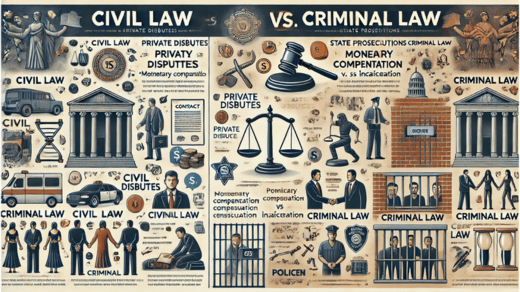
  • Civil Law vs. Criminal Law: Key Differences Explained

    Civil Law vs. Criminal Law: Key Differences Explained

    Understanding the legal system can often be confusing, especially when it comes to distinguishing between civil law and criminal law. Both areas of law are essential in maintaining order and justice in society, but they serve different purposes and operate under distinct principles. In this comprehensive guide, we will explore the key differences between civil law and criminal law, helping you to understand their unique functions and processes.

    What is Civil Law?

    Civil law primarily deals with disputes between individuals, organizations, or between individuals and organizations. These disputes typically involve private matters such as contracts, property, and family issues. The primary objective of civil law is to resolve these disputes and provide compensation or remedies to the aggrieved party.

    Common Areas of Civil Law

    1. Contract Law: This area governs agreements made between two or more parties. If one party fails to fulfill their obligations under a contract, the other party may seek legal remedies through civil court.
    2. Property Law: Property law covers disputes related to ownership and use of property. This includes real estate issues, landlord-tenant disputes, and property transfers.
    3. Family Law: Family law addresses issues such as divorce, child custody, and child support. It aims to resolve family disputes and provide solutions that are in the best interest of family members, especially children.
    4. Torts: Torts involve civil wrongs that cause harm or loss to another person. Common tort cases include personal injury claims, defamation, and negligence.

    Civil Law Procedures

    Civil cases typically involve a plaintiff (the party bringing the lawsuit) and a defendant (the party being sued). The plaintiff must prove their case by a “preponderance of the evidence,” which means they need to show that their version of events is more likely true than not. Remedies in civil cases often involve monetary compensation, specific performance, or injunctions.

    What is Criminal Law?

    Criminal law, on the other hand, deals with offenses against the state or society as a whole. These offenses are considered crimes, and the primary goal of criminal law is to punish the offender and deter others from committing similar acts. Criminal law also aims to rehabilitate offenders and protect the public.

    Common Areas of Criminal Law

    1. Felonies: These are serious crimes that typically result in severe penalties, including imprisonment for more than one year. Examples of felonies include murder, rape, and armed robbery.
    2. Misdemeanors: Misdemeanors are less severe than felonies and usually result in less severe penalties, such as imprisonment for less than one year or fines. Examples include petty theft, simple assault, and traffic violations.
    3. Infractions: Infractions are minor violations that usually result in fines rather than imprisonment. Examples include speeding tickets and littering.

    Criminal Law Procedures

    Criminal cases are initiated by the state or federal government, which prosecutes the accused (defendant) on behalf of society. The prosecution must prove the defendant’s guilt “beyond a reasonable doubt,” which is a higher standard than in civil cases. If found guilty, the defendant may face penalties such as imprisonment, probation, fines, or community service. In criminal cases, the defendant is presumed innocent until proven guilty.

    Key Differences Between Civil and Criminal Law

    Understanding the key differences between civil and criminal law can help clarify how each area of law functions and its purpose within the legal system.

    1. Purpose:
      1. Civil Law: Aims to resolve disputes and provide compensation or remedies to the aggrieved party.
      1. Criminal Law: Aims to punish the offender, deter crime, and protect society.
    2. Parties Involved:
      1. Civil Law: Involves a plaintiff (the party bringing the lawsuit) and a defendant (the party being sued).
      1. Criminal Law: Involves the state or federal government (the prosecution) and the defendant (the accused).
    3. Burden of Proof:
      1. Civil Law: Requires proof by a “preponderance of the evidence” (more likely true than not).
      1. Criminal Law: Requires proof “beyond a reasonable doubt” (a higher standard of proof).
    4. Penalties:
      1. Civil Law: Remedies often include monetary compensation, specific performance, or injunctions.
      1. Criminal Law: Penalties may include imprisonment, probation, fines, or community service.
    5. Outcome:
      1. Civil Law: The outcome usually involves the defendant being required to pay damages or fulfill a contractual obligation.
      1. Criminal Law: The outcome typically involves the defendant facing criminal penalties, such as incarceration or fines.
    6. Legal Representation:
      1. Civil Law: Parties may hire private attorneys or represent themselves in court.
      1. Criminal Law: Defendants have the right to legal representation, and if they cannot afford an attorney, one may be appointed by the court.
    7. Appeals:
      1. Civil Law: Either party may appeal the court’s decision if they believe there was an error in the proceedings.
      1. Criminal Law: Defendants may appeal a conviction if they believe there was a legal error or procedural mistake during the trial.

    Examples of Civil vs. Criminal Cases

    To illustrate the differences, consider the following examples:

    • Civil Case: A tenant sues their landlord for failing to make necessary repairs to the rental property. The court may order the landlord to make the repairs or pay damages to the tenant.
    • Criminal Case: A person is charged with theft after being caught shoplifting. If convicted, the person may face imprisonment, fines, or probation.

    Conclusion

    Civil law and criminal law serve distinct purposes within the legal system, each addressing different types of disputes and offenses. Civil law focuses on resolving private disputes and providing remedies to individuals, while criminal law aims to punish offenders and protect society. Understanding these differences is crucial for navigating legal matters effectively, whether you are involved in a civil dispute or facing criminal charges.

    By recognizing the key differences between civil and criminal law, you can better understand the legal processes and ensure that your rights and interests are protected. Whether dealing with a civil case or a criminal case, it is essential to seek appropriate legal advice and representation to navigate the complexities of the legal system successfully.

  • The Role of Criminal Lawyers: Defending Rights in the Justice System

    The Role of Criminal Lawyers: Defending Rights in the Justice System

    In the intricate world of the legal system, criminal lawyers play a crucial role in defending the rights of individuals accused of crimes. Their expertise and dedication are pivotal in ensuring that justice is served, and that the rights of the accused are upheld throughout the legal process. This article delves into the multifaceted role of criminal lawyers, their responsibilities, and the impact they have on the justice system.

    Understanding the Role of Criminal Lawyers

    Criminal lawyers, also known as defense attorneys, represent individuals charged with criminal offenses. Their primary goal is to provide a robust defense to their clients, ensuring that they receive a fair trial. This involves a range of tasks from investigating the case and gathering evidence to presenting arguments in court and negotiating plea deals. Criminal lawyers must be well-versed in criminal law and procedure, and possess excellent analytical and communication skills.

    Key Responsibilities of Criminal Lawyers

    1. Case Investigation and Evidence Gathering
      One of the initial responsibilities of a criminal lawyer is to conduct a thorough investigation of the case. This involves reviewing police reports, interviewing witnesses, and gathering evidence that may support the defense. Criminal lawyers often work with private investigators and forensic experts to uncover details that might be overlooked during the initial investigation. This meticulous approach helps build a solid defense strategy and ensures that no crucial information is missed.
    2. Legal Advice and Counsel
      Criminal lawyers provide essential legal advice to their clients, guiding them through the complexities of the legal system. They explain the charges, potential penalties, and possible defense strategies. By offering clear and informed counsel, criminal lawyers help their clients make educated decisions about their cases, including whether to accept a plea deal or proceed to trial.
    3. Plea Bargaining and Negotiation
      In many cases, criminal lawyers negotiate plea deals with prosecutors. A plea deal is an agreement where the defendant pleads guilty to a lesser charge in exchange for a reduced sentence. Criminal lawyers use their negotiation skills to secure the best possible outcome for their clients, which can include reduced charges, lighter sentences, or alternative sentencing options such as probation or community service.
    4. Trial Representation
      When a case goes to trial, criminal lawyers are responsible for representing their clients in court. This involves presenting evidence, cross-examining witnesses, and making persuasive arguments to the judge and jury. Criminal lawyers must be adept at courtroom procedures and strategies, as their performance during the trial can significantly impact the outcome of the case.
    5. Appeal and Post-Conviction Relief
      If a client is convicted, criminal lawyers can assist with the appeals process. This involves challenging the conviction or sentence on legal grounds, such as procedural errors or the introduction of improper evidence. Additionally, criminal lawyers can seek post-conviction relief options, including motions for a new trial or sentence modification.

    The Impact of Criminal Lawyers on the Justice System

    1. Ensuring Fair Trials
      Criminal lawyers play a fundamental role in upholding the principle of a fair trial. They ensure that their clients’ rights are protected and that the prosecution meets its burden of proof. By providing a robust defense, criminal lawyers help prevent wrongful convictions and ensure that the legal process is just and equitable.
    2. Protecting Constitutional Rights
      The U.S. Constitution guarantees certain rights to individuals accused of crimes, including the right to a fair trial, the right to remain silent, and the right to an attorney. Criminal lawyers are crucial in safeguarding these rights and ensuring that they are not violated. Their vigilance helps maintain the integrity of the justice system and protects individuals from potential abuses of power.
    3. Reducing the Risk of Wrongful Convictions
      A skilled criminal lawyer can significantly reduce the risk of wrongful convictions. By thoroughly investigating the case, challenging the prosecution’s evidence, and presenting alternative theories, criminal lawyers help prevent innocent individuals from being unjustly punished. Their work is essential in maintaining public trust in the legal system.
    4. Advocating for Reform
      Criminal lawyers also play a role in advocating for criminal justice reform. Through their experiences and observations, they can identify areas where the system may be failing or where improvements are needed. Many criminal lawyers actively participate in discussions about policy changes and work to address issues such as sentencing disparities, prison conditions, and the treatment of marginalized communities.

    Qualities of an Effective Criminal Lawyer

    1. Knowledge and Expertise
      An effective criminal lawyer must possess a deep understanding of criminal law and legal procedures. This includes knowledge of case law, statutes, and courtroom protocols. Continuous education and staying updated with legal developments are essential for providing competent representation.
    2. Analytical Skills
      Criminal lawyers must be able to analyze complex information, including evidence and legal arguments. Strong analytical skills enable them to identify weaknesses in the prosecution’s case and develop effective defense strategies.
    3. Communication Skills
      Effective communication is crucial for criminal lawyers. They must be able to articulate arguments clearly and persuasively, both in writing and orally. Good communication skills also help in negotiating with prosecutors and interacting with clients, witnesses, and experts.
    4. Ethical Integrity
      Maintaining high ethical standards is essential for criminal lawyers. They must act in the best interests of their clients while adhering to legal and professional ethics. Integrity and honesty are vital in building trust and ensuring that justice is served.

    Challenges Faced by Criminal Lawyers

    1. Emotional and Psychological Stress
      Defending individuals accused of serious crimes can be emotionally and psychologically taxing. Criminal lawyers often deal with high-stakes cases and clients who may be facing significant consequences. Managing this stress while providing effective representation requires resilience and support.
    2. Public Perception
      Criminal lawyers may face negative perceptions due to the nature of their work. They are sometimes viewed as defending individuals who are perceived as guilty or morally reprehensible. Despite this, their role is crucial in ensuring that everyone receives a fair trial, regardless of public opinion.
    3. Complexity of Cases
      Criminal cases can be highly complex, involving intricate legal issues, extensive evidence, and multiple parties. Navigating these complexities requires a high level of skill and expertise, and the ability to handle unexpected developments and challenges.

    Conclusion

    Criminal lawyers are essential to the justice system, serving as defenders of rights and advocates for fairness. Their role involves a range of responsibilities, from investigating cases and providing legal advice to representing clients in court and negotiating plea deals. Through their work, criminal lawyers ensure that the legal process is just, that constitutional rights are protected, and that the risk of wrongful convictions is minimized. Despite the challenges they face, criminal lawyers are dedicated to upholding the principles of justice and advocating for reform. Their contribution is vital in maintaining the integrity of the legal system and ensuring that all individuals receive a fair and equitable trial.