Blog

  • Steps You Can Take to Protect Your Intellectual Property 

    Steps You Can Take to Protect Your Intellectual Property 

    In today’s competitive business landscape, protecting your creative assets is crucial. Whether you’re an entrepreneur, an artist or a business owner, ensuring that your intellectual property (IP) is safeguarded can prevent financial loss and legal disputes. Here are some practical steps you can take to protect your intellectual property, including consultingwith intellectual property lawyers in Melbourne.

    Understand the Different Types of Intellectual Property 

    The first step in protecting your intellectual property is understanding the various types of IP protections available. These include: 

    ·        Trademarks – Protect brand names, logos and slogans. 

    ·        Patents – Safeguard inventions and unique processes. 

    ·        Copyrights – Cover creative works such as music, literature and art. 

    ·        Trade Secrets – Protect confidential business information and proprietary formulas. 

    Knowing which category your intellectual property falls under will help you determine the right legal protection strategy. 

    Register Your Intellectual Property 

    Once you’ve identified your intellectual property, you’ll need to register it with the appropriate authorities. In Australia, trademarks can be registered with IP Australia, while patents and design rights also fall under its jurisdiction. Copyright protection is automatic upon creation, but registering your work can provide additional legal evidence of ownership. Working with experienced intellectual property lawyers in Melbourne can help streamline the application process and ensure your IP is correctly registered, reducing the risk of infringement. 

    Use Contracts & Agreements 

    One of the most effective ways to protect your intellectual property is by using legally binding contracts. These agreements can help prevent disputes and ensure your rights are legally enforceable. Key contracts include: 

    ●       Non-Disclosure Agreements (NDAs) – Prevent confidential information from being shared. 

    ●       Licensing Agreements – Allow others to use your IP under specific terms. 

    ●       Work-for-Hire or Employment Contracts – Ensure that any IP created by employees or contractors belongs to your business. 

    Monitor & Enforce Your Rights 

    Even with legal protections in place, intellectual property theft can still occur. Regularly monitoring the market for potential infringements is essential. You can do this by: 

    ●       Conducting routine online searches for unauthorised use of your brand or content. 

    ●       Using digital tools to track IP violations. 

    ●       Keeping an eye on competitors to ensure they’re not infringing on your rights. 

    If you identify a violation, consulting with intellectual property lawyers in Melbourne can help you take fast legal action to enforce your rights and prevent further misuse. 

    Educate Employees & Business Partners 

    Many intellectual property breaches occur due to internal mismanagement rather than external threats. Educating your employees and business partners about the importance of IP protection can help prevent accidental leaks or misuse. Implement clear policies and conduct regular training sessions to ensure that everyone involved in your business understands their responsibilities regarding intellectual property. 

    Seek Legal Advice Early 

    Navigating intellectual property law can be complex, and mistakes can be costly. Seeking advice from intellectual property lawyers in Melbourne early in the process can ensure that your IP is properly protected from the outset. Lawyers can assist with registrations, contract drafting and enforcement actions, giving you peace of mind that your creative assets are secure. 

  • What Are the Risks of Ignoring Solar Panel Cleaning and Pigeon Proofing?

    What Are the Risks of Ignoring Solar Panel Cleaning and Pigeon Proofing?

    Solar panels are an excellent investment for eco-conscious homeowners and businesses, providing clean energy and reducing utility bills. However, neglecting routine maintenance, such as solar panel cleaning and pigeon proofing, can compromise their efficiency and longevity. Below, we explore the risks of ignoring these essential practices and why regular maintenance is crucial for maximizing the benefits of solar energy.

    Decreased Energy Efficiency

    One of the most significant risks of ignoring solar panel cleaning is reduced energy efficiency. Dust, dirt, bird droppings, and debris can accumulate on the panels, blocking sunlight and reducing their ability to generate power effectively. Over time, this buildup can decrease your system’s energy output by as much as 20-30%, leading to higher utility bills. Searching for a solar panel cleaning service near me ensures your panels remain clean and operating at peak efficiency.

    Permanent Damage to Solar Panels

    Leaving your solar panels dirty for extended periods can lead to permanent damage. Harsh debris and acidic bird droppings can erode the protective coating on the panels, causing discoloration and cracks. This damage not only diminishes performance but may also void your manufacturer’s warranty. Regular maintenance from a reliable solar panel cleaning company near me can prevent costly repairs and ensure your panels last for decades.

    Infestations Without Pigeon Proofing

    Pigeons and other birds love nesting beneath solar panels because they provide shelter and warmth. However, this habit can lead to several problems. Bird nests can block airflow under the panels, causing them to overheat and reducing their efficiency. Additionally, pigeon droppings can cause corrosive damage to your panels and your roof. Ignoring pigeon proofing solutions increases the risk of bird infestations, which can become a recurring and costly issue.

    Fire Hazards

    Bird nests under solar panels are not just a nuisance—they are a potential fire hazard. Nesting materials, combined with electrical wiring, can create conditions for a fire. This risk emphasizes the importance of both solar panel cleaning and pigeon proofing to ensure your solar system operates safely.

    Increased Costs Over Time

    While you may think you’re saving money by avoiding regular cleaning or pigeon proofing, the long-term costs of neglect far outweigh the initial expense of professional services. From reduced energy savings to expensive repairs or even complete panel replacements, neglecting maintenance can significantly impact your finances. Searching for solar panel cleaning near me and hiring professionals ensures your investment remains cost-effective.

    Why Hire Professionals?

    Professional services for solar panel cleaning and pigeon proofing offer several advantages. Experts use specialized equipment and techniques to clean your panels safely and effectively without damaging them. They can also install durable pigeon-proof barriers to prevent birds from nesting and protect your system from future infestations.

    By choosing a trusted solar panel cleaning company near me, you’ll enjoy peace of mind knowing your solar panels are well-maintained and delivering maximum efficiency.

    Conclusion

    Don’t let dirt and pigeons diminish your solar investment. Ensure your system stays efficient and protected by contacting a professional for solar panel cleaning in Phoenix, AZ. Take the first step today to keep your solar panels performing at their best!

  • Key Factors to Consider When Hiring an Expungement Attorney

    Key Factors to Consider When Hiring an Expungement Attorney

    When facing a criminal record, the prospect of expungement can offer a fresh start. However, navigating the legal process requires the expertise of an expungement attorney. Choosing the right one is critical to ensure your case is handled effectively and efficiently. Below are the key factors you should consider when hiring an attorney to guide you through this important process.

    Experience with Expungement Law

    Experience is one of the most important factors when hiring an expungement attorney. While many lawyers practice in a variety of legal areas, it’s essential to find one who specializes in expungement. These attorneys are familiar with the specific legal procedures, requirements, and challenges associated with expunging a criminal record. They can identify whether your case is eligible for expungement and advise you on the best course of action.

    Understanding the Local Legal Landscape

    Each state and jurisdiction has different laws regarding expungement. The process can vary significantly depending on where you are located. A qualified expungement attorney with knowledge of local laws and court systems can provide crucial insights. They will know the nuances of how the courts in your area handle expungement petitions. This localized expertise can make a substantial difference in the success of your case.

    Track Record of Success

    While experience is important, a strong track record of successful expungements speaks volumes. When researching potential attorneys, ask about their success rate with expungement cases. An attorney with a history of successfully securing expungements for their clients is more likely to handle your case with skill and attention to detail. Look for client reviews or testimonials that can provide insight into their abilities.

    Clear Communication and Accessibility

    Communication is vital throughout the legal process. It’s important that your expungement attorney is accessible and responsive to your questions. The legal process can be lengthy and complex, and you’ll want someone who keeps you informed at each stage. A good attorney will be able to explain the process in simple terms, ensuring you understand what’s happening and why certain steps are necessary.

    Expungement Attorney Fee Structure and Transparency

    Understanding how the expungement attorney charges for their services is essential. Some attorneys work on a flat fee basis, while others charge hourly rates. Be sure to ask about the pricing structure up front, so there are no surprises later. Transparency is key in this regard. A reputable attorney will provide clear information about their fees and any additional costs that may arise during the process.

    Comfort and Trust

    Expungement is a deeply personal matter. The attorney you hire will be handling sensitive information about your past. Therefore, it’s crucial that you feel comfortable and trust them with your case. A good attorney should listen to your concerns, offer thoughtful advice, and make you feel confident in their abilities. Trust is the foundation of any successful attorney-client relationship, and this is no different when it comes to expungement cases.

    Conclusion

    Hiring an expungement attorney is a pivotal decision. You need someone who has the expertise, experience, and communication skills to help you navigate the expungement process successfully. By considering factors such as experience with expungement law, knowledge of local legal procedures, a proven track record, and clear communication, you can find an attorney who will work in your best interests. Additionally, make sure to discuss fees upfront and ensure that you feel comfortable and confident in your attorney’s ability to handle your case.

  • Civil Law vs. Criminal Law: Key Differences Explained

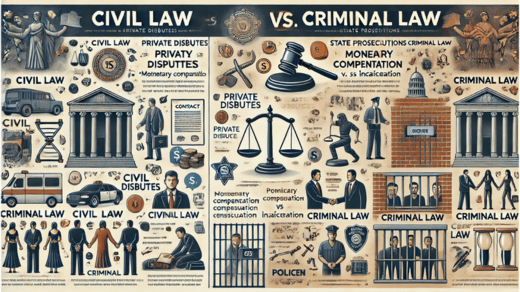
    Civil Law vs. Criminal Law: Key Differences Explained

    Understanding the legal system can often be confusing, especially when it comes to distinguishing between civil law and criminal law. Both areas of law are essential in maintaining order and justice in society, but they serve different purposes and operate under distinct principles. In this comprehensive guide, we will explore the key differences between civil law and criminal law, helping you to understand their unique functions and processes.

    What is Civil Law?

    Civil law primarily deals with disputes between individuals, organizations, or between individuals and organizations. These disputes typically involve private matters such as contracts, property, and family issues. The primary objective of civil law is to resolve these disputes and provide compensation or remedies to the aggrieved party.

    Common Areas of Civil Law

    1. Contract Law: This area governs agreements made between two or more parties. If one party fails to fulfill their obligations under a contract, the other party may seek legal remedies through civil court.
    2. Property Law: Property law covers disputes related to ownership and use of property. This includes real estate issues, landlord-tenant disputes, and property transfers.
    3. Family Law: Family law addresses issues such as divorce, child custody, and child support. It aims to resolve family disputes and provide solutions that are in the best interest of family members, especially children.
    4. Torts: Torts involve civil wrongs that cause harm or loss to another person. Common tort cases include personal injury claims, defamation, and negligence.

    Civil Law Procedures

    Civil cases typically involve a plaintiff (the party bringing the lawsuit) and a defendant (the party being sued). The plaintiff must prove their case by a “preponderance of the evidence,” which means they need to show that their version of events is more likely true than not. Remedies in civil cases often involve monetary compensation, specific performance, or injunctions.

    What is Criminal Law?

    Criminal law, on the other hand, deals with offenses against the state or society as a whole. These offenses are considered crimes, and the primary goal of criminal law is to punish the offender and deter others from committing similar acts. Criminal law also aims to rehabilitate offenders and protect the public.

    Common Areas of Criminal Law

    1. Felonies: These are serious crimes that typically result in severe penalties, including imprisonment for more than one year. Examples of felonies include murder, rape, and armed robbery.
    2. Misdemeanors: Misdemeanors are less severe than felonies and usually result in less severe penalties, such as imprisonment for less than one year or fines. Examples include petty theft, simple assault, and traffic violations.
    3. Infractions: Infractions are minor violations that usually result in fines rather than imprisonment. Examples include speeding tickets and littering.

    Criminal Law Procedures

    Criminal cases are initiated by the state or federal government, which prosecutes the accused (defendant) on behalf of society. The prosecution must prove the defendant’s guilt “beyond a reasonable doubt,” which is a higher standard than in civil cases. If found guilty, the defendant may face penalties such as imprisonment, probation, fines, or community service. In criminal cases, the defendant is presumed innocent until proven guilty.

    Key Differences Between Civil and Criminal Law

    Understanding the key differences between civil and criminal law can help clarify how each area of law functions and its purpose within the legal system.

    1. Purpose:
      1. Civil Law: Aims to resolve disputes and provide compensation or remedies to the aggrieved party.
      1. Criminal Law: Aims to punish the offender, deter crime, and protect society.
    2. Parties Involved:
      1. Civil Law: Involves a plaintiff (the party bringing the lawsuit) and a defendant (the party being sued).
      1. Criminal Law: Involves the state or federal government (the prosecution) and the defendant (the accused).
    3. Burden of Proof:
      1. Civil Law: Requires proof by a “preponderance of the evidence” (more likely true than not).
      1. Criminal Law: Requires proof “beyond a reasonable doubt” (a higher standard of proof).
    4. Penalties:
      1. Civil Law: Remedies often include monetary compensation, specific performance, or injunctions.
      1. Criminal Law: Penalties may include imprisonment, probation, fines, or community service.
    5. Outcome:
      1. Civil Law: The outcome usually involves the defendant being required to pay damages or fulfill a contractual obligation.
      1. Criminal Law: The outcome typically involves the defendant facing criminal penalties, such as incarceration or fines.
    6. Legal Representation:
      1. Civil Law: Parties may hire private attorneys or represent themselves in court.
      1. Criminal Law: Defendants have the right to legal representation, and if they cannot afford an attorney, one may be appointed by the court.
    7. Appeals:
      1. Civil Law: Either party may appeal the court’s decision if they believe there was an error in the proceedings.
      1. Criminal Law: Defendants may appeal a conviction if they believe there was a legal error or procedural mistake during the trial.

    Examples of Civil vs. Criminal Cases

    To illustrate the differences, consider the following examples:

    • Civil Case: A tenant sues their landlord for failing to make necessary repairs to the rental property. The court may order the landlord to make the repairs or pay damages to the tenant.
    • Criminal Case: A person is charged with theft after being caught shoplifting. If convicted, the person may face imprisonment, fines, or probation.

    Conclusion

    Civil law and criminal law serve distinct purposes within the legal system, each addressing different types of disputes and offenses. Civil law focuses on resolving private disputes and providing remedies to individuals, while criminal law aims to punish offenders and protect society. Understanding these differences is crucial for navigating legal matters effectively, whether you are involved in a civil dispute or facing criminal charges.

    By recognizing the key differences between civil and criminal law, you can better understand the legal processes and ensure that your rights and interests are protected. Whether dealing with a civil case or a criminal case, it is essential to seek appropriate legal advice and representation to navigate the complexities of the legal system successfully.

  • Best Lawyers in Jaipur: A Guide to Legal Expertise

    Best Lawyers in Jaipur: A Guide to Legal Expertise

    Jaipur, the vibrant capital of Rajasthan, is not only known for its rich history, architecture, and culture but also for its growing legal community. Whether you’re facing personal legal challenges, corporate matters, or need legal advice, Jaipur has a wide range of skilled lawyers who can provide expert services. In this blog, we’ll explore some of the best lawyers in Jaipur across various practice areas.

    1. SAG Legal:
    2. Specialization: Criminal Law, Family Law, Divorce Lawyers in Jaipur, Civil Litigation
    3. About: SAG Legalare seasoned lawyersand have a team of best advocates in Jaipurwith over many  decade of experience in handling criminal, civil, consumer and family law matters. They offer expert advice in divorce, domestic violence, Criminal Law, Consumer Cases, Corporate Law, RERAand property disputes. They are known for their client-cantered approach and commitment to delivering favourable outcomes.
    4. Location: C-Scheme, Jaipur
    5. Website:https://www.saglegal.in/
    • Amicus Publico
    • About: Corporate Consultancy and Alternate Dispute Resolution.
    • Location: Mansarovar, Jaipur

    3. Ram & Rama

    • Specialization: Criminal, Corporate and Financial
    • Location: Lal Kothi, Jaipur

    4. Khanna & Associates

    • Specialization: Business, Commercial, Corporate, Arbitration, Labor & Service subjects in law
    • Location: Mansarovar, Jaipur

    5. Advocate Anand & Associates

    • Specialization: Armed forces Law, Service law, Property Law
    • Location: Dadi ka Phatak, Jaipur

    6. Ranjan Law

    • Specialization: Family, Matrimonial, Consumer, Arbitration
    • Location: C-Scheme, Jaipur

    7. Advocate Rajeev

    • Specialization: Family, Matrimonial, Consumer, Arbitration
    • Contact: Bapu Nagar, Jaipur

    8. Advocate Shirin

    • Specialization: family court, civil matters, civil cases, drt
    • Location: Naya Khera, Jaipur

    9. Advocate Suruchi

    • Specialization: Banking & Finance Law, Debt Recovery, Insolvency
    • Contact: Lal Kothi, Jaipur

    10. Advocate Vishnu Kumar Sharma

    • Specialization: Marriage Lawyer
    • Contact: Murlipura, Jaipur

    Conclusion

    Whether you need help with a personal legal issue, corporate matters, or litigation, Jaipur has a diverse set of experienced lawyers and criminal lawyers in jaipur who can guide you through the legal maze. The lawyers listed above have a proven track record of success in their respective fields and are trusted by clients for their expertise and dedication. When seeking legal help, always take the time to meet with a lawyer to discuss your case and find the best fit for your needs.

    Note: This list is not exhaustive, and it is always advisable to do thorough research or seek referrals before hiring a lawyer for your specific legal needs.

  • What Are the 30 Most Common Corporate Legal Pitfalls?

    1. Poor Business Formation

    Failure to incorporate or selection of the wrong business structure (LLC, C Corp, S Corp, etc.).

    2. Failure to Observe Corporate Formalities

    Failure to hold required meetings (board or shareholder meetings).

    Failure to maintain minutes and resolutions.

    3. Poor Record Keeping

    Poor documentation of financial transactions, contracts, or agreements.

    Failure to maintain proper corporate books.

    4. Co-Mingling Business and Personal Finances

    Mixing personal and corporate funds, which risks “piercing the corporate veil.”

    5. Breach of Fiduciary Duties

    Directors or officers not acting in the best interests of the company or shareholders.

    6. Violation of Employment Laws

    Failure to comply with minimum wage, overtime, and anti-discrimination laws.

    Misclassifying employees as independent contractors.

    Also read:

    7. Failure to Have Employment Contracts

    Failure to have written employment agreements or define roles and responsibilities.

    8. Failure to Comply with Workplace Safety Standards

    Failure to comply with OSHA (or equivalent local) safety regulations.

    9. Failure to Protect Intellectual Property

    Failure to trademark or patent key assets, such as logos, products, or processes.

    Utilizing the intellectual property of others without authorization.

    10. Confidentiality Agreements

     Failure to protect trade secrets or confidential information.

    11. Inadequate Data Protection

     Failure to meet data privacy law requirements of GDPR, CCPA, HIPAA, or any other related requirements.

    Cybersecurity fails or breaches occur through neglect.

    12. Contract Errors

    Poorly worded or incomplete contracts entered into.

    Contractual breaches with resultant court litigation.

    13. Tax Compliance End

    Late tax filings, underreporting income, or failure to remit payroll taxes.

    14. Violation of Environmental Laws

    Failure to comply with waste disposal, emissions, or environmental impact assessments.

    15. Violation of Anti-Money Laundering (AML) Laws

    Failure to have KYC (Know Your Customer) protocols and other AML controls.

    16. Violation of Securities Laws

    Failure to disclose material information to investors.

    Insider trading or misrepresentation.

    17. Mismanagement of Employee Benefits

    Failure to comply with health insurance, retirement plans, or paid leave laws.

    18. Unclear or Missing Shareholder Agreements

    Failure to define shareholder rights and responsibilities, which leads to disputes.

    19. Failure to Comply with Licensing and Permits

    Operating without industry-specific or local licenses.

    20. False or Misleading Advertising

    Violating consumer protection laws with false marketing claims.

    21. Inadequate Risk Management

    Operating without liability, property, or business interruption insurance.

    22. Non-Compliance with Anti-Corruption Laws

    Violating laws such as the FCPA (U.S.) or the UK Bribery Act by allowing bribery or kickbacks.

    23. Failure to Implement Whistleblower Protections

    Retaliation against employees who blow the whistle on unethical or illegal activities.

    24. Failure to Respond to Harassment Complaints

    Failure to address workplace harassment complaints, resulting in lawsuits or regulatory actions.

    25. Failure to Comply with International Trade Laws

    Violations of customs regulations, tariffs, or trade sanctions on imports/exports.

    26. Failure to Plan for Succession

    No succession plan for leadership when key executives retire, die, or leave.

    27. Failure to Comply with Real Estate Laws

    Failing to comply with zoning, leasing, or property use regulations.

    28. Not Preparing for Bankruptcy or Insolvency

    Mismanaging debts or ignoring insolvency laws during financial distress.

    29. Mismanaging Mergers and Acquisitions

    Overlooking due diligence or ignoring antitrust regulations.

    30. Failure to Adapt to Changing Laws

    Not staying updated on legal changes, such as tax reforms or new labor laws.

    Conclusion

    It requires proactive legal management, regular audits, and consulting with experienced attorneys to avoid these common pitfalls. A strong compliance culture will not only protect your business but also promote growth and sustainability.

  • 40 Questions to Understand Your Rights as a Consumer

    General Consumer Rights

    What is consumer protection law?

    It is a set of laws and regulations designed to safeguard consumers against unfair trade practices, fraud, and defective goods or services.

    Who is considered a consumer under the law?

    A consumer is someone who purchases goods or services for personal use, not for resale or commercial purposes.

    What are the basic rights of a consumer?

    The right to safety, information, choice, redress, representation, consumer education, and a healthy environment.

    Why do consumers need protection?

    Consumer protection relates to ensuring there is fairness in the marketplace, transparency, and safeguarding consumers from exploitation.

    Also read:

    What is the Consumer Protection Act?

    Consumer Protection Act relates to a law, for example, the Consumer Protection Act 2019 in India which spells out the rights that consumers enjoy and provides a clear prescription for grievance redressal.

    Rights regarding Products

    What is the right to safety?

    Consumers have the right to have protection against harmful or dangerous products.

    What do I do if I buy a faulty product?

    ÿ Provide for a replacement or a refund and take the case to court if the seller does not solve the problem.

    Am I entitled to a refund?

    Yes, you are eligible to a refund, repair, or replacement if the item is defective or not as described.

    What is a warranty?

    A warranty is an assurance given by the seller or the manufacturer that a product will meet the requirements given to a particular period of time.

    What is the difference between a warranty and a guarantee?

    A warranty is normally printed, covering a set of specific repairs or replacements. A guarantee, on the other hand, is a promise to have good quality. 

    Rights Relating to Services

    What is the right to fair services?

    Consumer is entitled to services of a reasonable standard quality and performance.

    What should I do if a service provider fails to deliver as promised?

    File a complaint with the service provider and escalate it to regulatory bodies or consumer courts if necessary.

    Can I cancel a service contract?

    Yes, but cancellation terms depend on the contract. Make sure you understand the terms before signing.

    What is false advertising in services?

    False statements about a service’s quality, benefits, or pricing that are likely to deceive consumers.

    Is a customer entitled to know the charge of a particular service before obtaining it?

    Of course, every service provider shall give clear visibility on the extra charge and proper notice relating to charges.

    Right To Information

    What is Right To Information?

    Right to acquire information about product or service for obtaining information about components, usage instructions, and all types of side effects.

    How can I prove whether a commodity is original?

    You can use any certificate labels or serial number, and shop only from authenticated vendors.

    Deceptive Trade Practice

    Engages in practices such as misleading advertising, fake discounts, and concealing key information to the detriment of consumers.

    What do I do if a company misleadingly advertises its product?

    Report to consumer protection agencies or sue.

    What is price transparency?

    Businesses should forthrightly disclose the full price paid, including taxes, fees, and extra charges.

    Reporting Complaints

    How can I file a consumer complaint?

    You should write to the seller or service provider, contact a consumer helpline, or file a case with a consumer court.

    What is a consumer court?

    A judicial body that resolves disputes between consumers and businesses.

    What documents are required to file a complaint?

    Proof of purchase (receipts), warranty cards, communication records, and any evidence of the issue.

    What is the time limit for filing a complaint?

    Normally, within two years of the occurrence, though it may vary depending on the jurisdiction.

    Can I lodge a complaint online?

    Yes, many jurisdictions provide online portals to lodge consumer complaints.

    Consumer Rights in the Digital Age

    What safeguards are there for online shopping?

    Right to refunds, returns, and protection against counterfeit products.

    How do I report an online scam?

    Report to the e-commerce platform, cybercrime authorities, and lodge a consumer complaint.

    What is data privacy in consumer protection?

    Companies will keep personal data private and may not disclose it without consent.

    Can I cancel an online order?

    Yes, most platforms will accept cancellation if effected before shipping; otherwise, as per their rules

    What are my rights with digital products?

    Digital products shall be free of defects in any respect. The selling company should give details regarding system requirements and compatibility.

    Redress Rights What is redress?

    Redress refers to receiving compensation, a refund or replacement for defective products or bad services.

    What is a class action lawsuit?

    A lawsuit in which a large number of consumers with a similar grievance file a collective complaint against a business.

    Can I sue a company for compensation for damage caused by a product?

    Yes, under product liability law manufacturers can be held liable for harm caused by defective products.

    What is product liability?

    The legal liability of a manufacturer or seller for defective products causing damage.

    What is the Role of Regulatory bodies in redress?

    They enforce consumer protection law, investigate grievances, and penalize offenders.

    Consumer Awareness

    Right to Consumer education

    The Right to Consumer information that would lead to informed choice in buying decisions.

    How will I know an authentic product?

    Check the legitimacy of certifications or reviews, not to take deal that is seen too good

    What are the Counterfeit goods?

    Counterfeit or unauthorized copies of branded products in violation of intellectual property rights.

    How can one avoid being scammed?

    Researching products and vendors, reading the terms and conditions, and being cautious about information shared.

    Why is consumer awareness important?

    Consumer awareness empowers people to know unfair practices and seek remedies to make better choices.

    Conclusion

    Understanding these key aspects of consumer rights helps you protect yourself from fraud, defective products, and unfair practices. If you encounter issues, take immediate action through consumer protection mechanisms or seek legal assistance.

  • 40 Landmark Cases in Health Law That Changed Healthcare Practices

    Patient Rights and Consent

    Schloendorff v. Society of New York Hospital (1914)

    Issue: Informed consent.

    Outcome: Determined that patients have the right to determine what is done with their bodies.

    Canterbury v. Spence (1972)

    Issue: Duty to inform.

    Also read:

    Outcome: Held that physicians have a responsibility to disclose risks of medical procedures.

    Cruzan v. Director, Missouri Department of Health (1990)

    Issue: Right to refuse treatment.

    Outcome: Established that a person has the right to forego life-sustaining treatment.

    Tarasoff v. Regents of the University of California (1976)

    Issue: Duty to warn.

    Outcome: Healthcare providers have a duty to inform third parties of imminent dangers.

    In re Quinlan (1976)

    Issue: Treatment at end of life

    Outcome: Court approved withdrawal of life support based on consent of family members.

    Medical Malpractice

    Hall v. Hilbun (1985)

    Issue: Duty of care

    Outcome: Established national standards for medical treatment in malpractice suits.

    Helling v. Carey (1974)

    Issue: Failure to perform diagnostic testing.

    Outcome: Adopted liability in failing to conduct diagnostic testing.

    Caparo Industries v. Dickman (1990)

    Issue: Duty of care.

    Result: Established the threshold of closeness to establish the element of negligence.

    McCall v. United States (2014)

    Problem: Tort damages caps

    Result: Found non-economic damages caps unconstitutional in Florida

    Nettles v. Gaddis (1998)

    Problem: Medical malpractice regarding surgery

    Result: Determined proper surgical practice

    Healthcare Discrimination

    Brown v. Board of Education (1954)

    Problem: Racial separation

    Result: Although it is an education case, it provides a basis to address the unequal treatment in health care.

    Simkins v. Moses H. Cone Memorial Hospital (1963)

    Problem: Racial healthcare discrimination.

    Outcome: Prohibited federal funding for segregated hospitals.

    Olmstead v. L.C. (1999)

    Issue: Disability discrimination.

    Outcome: Affirmed the rights of disabled individuals to community-based treatment.

    Bragdon v. Abbott (1998)

    Issue: HIV discrimination.

    Outcome: Held that HIV is a disability under the Americans with Disabilities Act (ADA).

    Burwell v. Hobby Lobby Stores, Inc. (2014)

    Issue: Religious exemptions in healthcare.

    Outcome: Permitted businesses to deny contraceptive coverage based on religious beliefs.

    Reproductive Rights

    Roe v. Wade (1973)

    Issue: Abortion rights.

    Outcome: Legalized abortion nationwide (overturned in Dobbs v. Jackson Women’s Health Organization in 2022).

    Planned Parenthood v. Casey (1992)

    Issue: Abortion regulations.

    Outcome: Allowed states to impose restrictions that do not place an “undue burden” on women.

    Whole Woman’s Health v. Hellerstedt (2016)

    Issue: Abortion facility regulations.

    Outcome: Struck down laws imposing unnecessary burdens on abortion providers.

    Griswold v. Connecticut (1965)

    Issue: Contraceptive rights.

    Outcome: Legalized the use of contraceptives for married couples.

    Zubik v. Burwell (2016)

    Issue: Contraceptive mandates.

    Result: Religious beliefs undergirding contraceptive coverage re-affirmed

    Health Insurance and Access

    National Federation of Independent Business v. Sebelius (2012)

    Issue: Affordable Care Act (ACA).

    Holding: Held that the ACA’s individual mandate was a tax and, thus, constitutional

    King v. Burwell (2015)

    Issue: Health insurance subsidies

    Holding: Upheld ACA’s subsidies to individuals enrolled through federally facilitated exchanges

    Rush Prudential HMO, Inc. v. Moran (2002)

    Issue: Liability of HMOs

    Holding: Vested authority in independent review for claims of health insurance denial

    Doe v. Mutual of Omaha Insurance Co. (1999)

    Issue: HIV/AIDS coverage caps.

    Conclusion: Overturned discriminatory coverage limits.

    Rowland v. Christian (1968)

    Issue: Care access.

    Conclusion: Extended duty of care to include risks that may foreseeably occur.

    Public Health

    Jacobson v. Massachusetts (1905)

    Issue: Vaccine mandates.

    Conclusion: Held compulsory vaccination statutes constitutional.

    Cruickshank v. Holladay (1987)

    Issue: Quarantine power.

    Conclusion: Vindicated the state’s authority to compel quarantines in epidemic times.

    Gonzales v. Oregon (2006)

    Issue: Assisted suicide.

    Conclusion: Allowed states to enact laws permitting physician-assisted suicide.

    South Dakota v. Dole (1987)

    Issue: Federal public health funding.

    Outcome: Allowed conditional federal funding of state programs.

    Wyeth v. Levine (2009)

    Issue: Prescription drug labeling.

    Outcome: Held drug manufacturers liable for inadequate labeling.

    Biotechnology and Research

    Association for Molecular Pathology v. Myriad Genetics, Inc. (2013)

    Issue: Patenting genes.

    Outcome: Banned patenting of naturally occurring genes.

    Moore v. Regents of the University of California (1990)

    Issue: Ownership of genetic material.

    Outcome: Patients do not own their discarded cells used in research.

    Sherley v. Sebelius (2012)

    Issue: Stem cell research.

    Result: Permitted federal funding for a particular type of stem cell research.

    Diamond v. Chakrabarty (1980)

    Issue: Patenting biotechnology.

    Result: Permitted the patenting of genetically altered organism.

    Grimes v. Kennedy Krieger Institute (2001)

    Issue: Research ethics.

    Result: Demonstrated necessity of informed consent in nontherapeutic research

    Telemedicine and Emerging Issues

    Doe v. Walmart (2020)

    Issue: Health care data breach.

    Result: Telemedicine demonstrated the need for cybersecurity.

    Gamble v. United States (1971)

    Issue: Healthcare for prisoners.

    Outcome: Established that the denial of medical care violates the Eighth Amendment.

    People v. Jovanovic (1999)

    Issue: Digital privacy in healthcare.

    Outcome: Established admissibility of digital evidence.

    Riggins v. Nevada (1992)

    Issue: Involuntary medication.

    Outcome: Limited the administration of antipsychotic drugs.

    Doe v. Bolton (1973)

    Issue: Healthcare access.

    Outcome: Defined health as the overall well-being, including physical, emotional, and psychological health.

    Conclusion

    These landmark cases have shaped the modern healthcare system, balancing patient rights, provider responsibilities, and public health priorities. They continue to influence healthcare practices, policymaking, and ethical standards worldwide.

  • 30 Common Scenarios Where Consumer Protection Law Can Help

    1. Defective Goods

    Buying a product that breaks or doesn’t conform to claimed quality.

    2. False Advertising

    Being deceived by unrealistic or untrue claims in advertisements for products.

    3. Overcharging

    Overpaying for a product or service above what is advertised or agreed on.

    4. Failure to Deliver Goods

    Ordering a product online or in a physical store and never receiving it.

    5. Defective Repairs

    Receiving sub-standard repair or service on electronics, cars, and even other products.

    Also read:

    6. Misrepresentation of Services

    Engagement of a service provider that fails to deliver services offered.

    7. Breach of Warranty

    Being refused warranty services after a product still has warranty life.

    8. Unsafe Products

    Having harm or injury from design defect or manufacture flaw in any product.

    9. Unauthorized Charges

    Accrual of extra and hidden charges for any transaction after completion.

    10. Low Quality Food

    Consuming food that is staling, tainted, or in a condition harmful to health.

    11. Charges for Cancellation

    Being charged outrageous fees to cancel subscriptions, memberships, or bookings.

    12. Unsolicited Goods

    Receiving goods not ordered and being coerced into paying for them.

    13. Billing Errors

    Being overcharged for utilities such as electricity, water, or phone services.

    14. Refusal of Refund

    Being denied a refund after returning a defective or inappropriate product.

    15. False Discounts

    Finding that a “sale” price is the same as or higher than the regular price.

    16. Hidden Terms in Contracts

    Falling prey to undisclosed terms in a contract or subscription.

    17. Internet Scams

    Money lost through fake sites or scam e-commerce.

    18. Invasion of Privacy

    Company is sharing or selling personal information without permission.

    19. Identity Theft

    You have your identity stolen because a service provider has been careless.

    20. Post-Sale Support

    Seller does not provide adequate or any support after the sale.

    21. Collection Agencies Harassment

    Debt collectors using abusive or threatening practices.

    22. Non-Compliance with Delivery Dates

    Experiencing unreasonable delays in the delivery of purchased goods or services.

    23. Airline and Travel Issues

    Losing money due to last-minute cancellations, overbooking, or denied boarding.

    24. Price Gouging

    Being charged exorbitant prices for essential items during emergencies.

    25. Medical Negligence

    Receiving improper or negligent care from a healthcare provider.

    26. Unethical Banking Practices

    Being misled by banks regarding hidden fees, interest rates, or terms of loans.

    27. Misleading Financial Products

    High return investment schemes with false promises

    28. Shoddy construction or building

    Finding defects in newly acquired house or apartment

    29. Gift and Coupon Denial

    Being deprived of the facility to redeem valid gift card, coupon, or promotion

    30. Poor educational facilities

    Payment for courses or programs that would not meet set standards

    Conclusion

    Consumer protection law provides remedies to individuals in such cases in the form of refunds, replacements, compensation, or litigation. Knowledge of these common circumstances will help consumers identify unfair practices and take appropriate action. For complex cases, one should seek advice from a consumer rights advocate or lawyer.

  • 30 Ways Property Law Protects Your Real Estate Investments

    Ownership Protection

    Good Title Ownership

    Ensures the validity of ownership without defects or disputes.

    Title Insurance

    Safeguards against any titles defects, liens, and claims arising later after sale

    Adverse Possession Rules

    Protects property against individuals laying claims to property through illegal possession.

    Also read:

    Boundary Dispute Resolution

    Clear boundaries which help in avoidance of trespass and encroachment or neighbor dispute.

    Legal Description Accuracy

    Validates that correct boundary measurements are put down regarding the size of the property. 

    Transaction Safeguards

    Regulation on Sale Contracts

    Legally binds both the buyer and seller into an agreement.

    Disclosure Requirements

    Forces sellers to disclose any known defects or issues with the property.

    Mortgage Fraud Prevention

    Imposes laws that govern fraudulent mortgage practices to safeguard the buyer and the lender.

    Appraisal Accuracy

    Guarantees that a fair property valuation is given by imposing legal standards.

    Escrow Services

    Guards funds and documents in the closing process until all conditions are met.

    Zoning and Land Use Protections

    Zoning Laws

    Protect property investments by controlling land use (residential, commercial, industrial).

    Land Use Permits

    Ensure legal compliance for construction, renovations, or business activities on your property.

    Environmental Protections

    Imposes regulations to avoid environmental hazards that may devalue your property.

    Building Code Compliance

    Requires compliance with safety and construction standards for improvements in your property.

    Historic Preservation Laws

    Protect investments in properties of historical or cultural value.

    Financial Security

    Lien Protections

    Avoids unauthorized liens on your property without your knowledge or consent.

    Tax Assessment Appeals

    Allows a legal way to dispute inflated property tax appraisals.

    Foreclosure Statutes

    Guarantees that due process is afforded in foreclosure actions, so time exists to settle or redeem the property.

    Landlord-Tenant Statutes

    Preserves your right to collect rent and recover possession of your property.

    Rental Income Protection

    Enforces the terms of the lease so that rental income becomes more predictable.

    Risk Management

    Nuisance Statutes

    Protects your property’s value and enjoyment from interference by noise, odors, or pollution.

    Easement Rights

    Controls shared access or usage rights to ensure the functionality of your property.

    Remedies for Trespass

    Offers legal means to address unauthorized structures or intrusions.

    Insurance Laws

    Requires sufficient insurance to safeguard against natural disasters, theft, or accidents.

    Claims for Damages

    Establishes legal means of recovery in cases of negligence or malicious actions.

    Investment Growth

    Subdivision Laws

    Facilitates legal subdivision of land, thereby opening it up to investment.

    Protection of Co-Ownership

    Protects investments in co-owned properties by clearly outlining rights and obligations.

    Protection at Inheritance

    Property gets transferred based on your will or estate plan.

    Redevelopment Rights

    It gives legal channels for changing or renovating your real estate for more benefits.

    Intellectual Property for Developers

    It safeguards various designs, branding, or innovations in real estate projects.

    Conclusion

    Property law ensures that your real estate investments are secure, legally protected, and primed for growth. It addresses possible risks and dispute resolution mechanisms to act as a critical safeguard of your assets. Consulting a property attorney ensures you fully leverage these protections and avoid costly mistakes.